Friday, May 24, 2013

How Animals Adapt in the Rainforest


All creations fight for survival. May it be plants, animals, and even us humans, are all living each day as an investment to a more comfortable living in the future. Each day is a task and a test. The tougher and more adapted you are, the larger your chance for survival.

Rainforests only cover a little portion of the planet, but almost half of all the animals on Earth are found in them. We cannot say that all conditions in the rainforest like the climate and availability of foods are all suitable for all kinds of animals. That’s when the term ‘adaptation’ comes in. All animals, even plants in the rainforest are using this ability to survive in the area. Usually, they use these adaptations to maximize their ability to eat and provide protection for themselves.


BIRDS. Beaks of birds are not just organs for catching and putting foods in their mouths. This organ of theirs has evolved to different forms and sizes in order to meet their different needs especially when it comes to diet. For example, Toucans and Macaws have large and strong beaks to help them crack hard nuts. 

MAMMALS. As we all know, monkeys and all the family of apes have longer arms and legs. This feature becomes unique to them because they spend most of their entire life in the canopy of trees. This serves the two primary purposes of adaptations – to increase their capability to find food and at the same time, to keep themselves from predators. Apes do this to avoid being caught by predators on the ground, and to find food on trees. Particular specie of ape, the aye-aye has evolved itself to being a nocturnal feeder in order to avoid being caught by its predators in the daylight.

On the other hand, the South American jaguar has developed its ability to swim so that it can find food not just on land but in the rivers as well in the form of fishes and turtles. This adaptation is needed in order to survive in a wet rainforest.

AMPHIBIANS. Most amphibians have granular glands that give them the ability to release poison. This ability helps them resist the attacks of predators around them. But take note, not all frogs, have poison in them. Mostly those species that have bright colors in them are the ones containing poison. Secreting poison is not just the adaptation found in frogs. The Amazon Horned Frog uses its physical appearance to survive in the rainforest. It has developed a body that mimics a leaf litter, so when it senses a prey nearby, it just have to lie itself on a pile of leaves and wait for the prey to come and eat it.

Image credit: http://www.buzzle.com/

Saturday, May 4, 2013

Facts about the Jamaican Blackbird


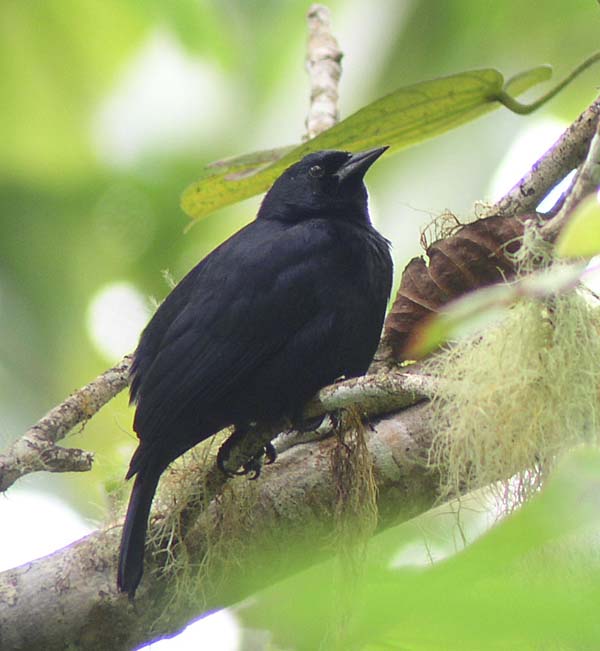
The Jamaican Blackbird is a small bird covered with black feathers, as the name suggests. What’s interesting to know is that majority of this bird’s life is spend with its partner, making it monogamous. It is considered to be heard more than sees, primarily because of its distinctive songs and call for its partner. Unfortunately, this bird is also the most endangered in Jamaica.

Physical Description and Behavior


The blackbird has a pointed and curved bill and has a short tail. This specie is endemic to the country of Jamaica. They spend mostly of their entire life in tree canopies. Jamaican blackbirds feed on invertebrates like insects to survive. Mostly, their diet is found on inner branches making it similar to woodpeckers. Their nests are composed primarily of orchids constructed between trunks of trees. As mentioned earlier, these birds are loyal to their partners spending the rest of their lives with just one partner. Usually, blackbirds’ eggs are laid between May and July, and it takes fourteen days for incubation, while the male blackbird is watching over the nest for possible threats.
The Jamaican blackbird has short legs but longer claws; the short tail is useful in climbing up branches. They also have adapted stronger jaws for hammering and probing. 

Habitat  

This bird lives on wet forests with abundant epiphytes or air plants, since they are depending on those for food. At present, it lives in one region in Jamaica, the Cockpit country to where it is protected. As you know, Jamaican blackbird is in serious threat against several factors that’s why it needs to be preserved in a specific area. In the wild, it avoids places affected by strong winds. 

Main Threats

Jamaican blackbird is critically endangered. The principal threat accounts to loss of habitat. Several innovations like establishment of coffee plantations, small-scale farming and charcoal-making are responsible to destruction of their natural habitat. The blackbirds are primarily affected for they depend mostly on large trees with ferns and aerial plants for survival. As construction companies cut down trees for clearing areas to be developed, they are also cutting down the chance of these blackbirds to leave peacefully in the wild.

Photo credits to: http://birdingblogs.com/

Saturday, April 20, 2013

Top Caribbean “Secret” Destinations

The island of Jamaica doesn’t blend in easily with the rest of the Caribbean archipelago, despite of its location which smack in the Caribbean Sea. It isn’t all just yachts and cruise ports. To be sure, here are some of the regions with countless experiences that don’t get as much press, but deliver unbeatable trips.

Dominica’s Boiling Lake


Photo credits to: tourismontheedge.com

One of Dominica’s UNESCO World Heritage site. The 207- foot-wide lake filled with bubbling grayish-blue water is easily viewed in its continuous rolling-boil state – which looks like a giant pot of water cooking and steaming on a stove. It covers a distance of approx. 7 miles from the path village of Laudat. And it’s perfectly scenic hike to complete takes around 3 hours each way.

The ‘Caribbean Pompeis’


Photo credits to: ssets.vice.com
In 1995, when the volcano in the Soufriere Hills shattered high over the small capital of the island of Montserrat, the Plymouth turned into the Pompeii of the Caribbean. In the end all the 11,000 island’s residents relocated. Nowadays, using a 4WD vehicle, visitors can drive along to visit the strange scene of abandoned mansions around Olde Town and get a supernatural view from Garibaldi Hill.

In the meantime, St. Pierre, which was known as the "Paris of the West Indies," was wrecked by an eruption in 1902. Today, ones who visit the St. Pierre can picture the blackened ruins as well as the      800-seat  theater destroyed in 18th century.

Cycling in Guantánamo

Photo credits to: southcom.mil

The region consists of the infamous Guantánamo Bay US Naval Base, and also one of the country’s spectacular drives between the Guantánamo and Baracoa- Cuba’s small windswept coastal town right on the eastern tip of the island, which is a great place to relax.

Saturday, April 13, 2013

Learning about Jamaican Culture


Culture, as we put it, is a collection of beliefs and ideas of people in a specific place. Different countries come with different cultures of course.  In this site, let’s come to know more about Jamaican culture – a colorful mixture of various people’s influences.

Out of Many, One People

That’s the motto, and perhaps provides the most suitable definition of culture of Jamaica. This symbolism was adapted after their liberation from Great Britain in 1962. In Jamaica’s National Flag, we can also trace their rich cultural heritage- two black triangles symbolizes historical struggles, green triangles represent agricultural riches, and yellow-cross stripes that symbolizes the sun and its mineral resources. The national symbolism also represents the combination among the cultures of Africa, Europe, India and China which led to the present Jamaican culture.

The People.  Jamaicans are said to be intriguing and unique individuals. They are also friendly and altruistic shown in their unofficial motto: “No problem man.” Strong family ties also identify the Jamaicans. They value the importance of family above all. Jamaicans also have this idea of ‘utilizing whatever is available to make something remarkable.’ Though they somewhat are laidback, Jamaicans also are hard-working people which have strong belief in honest labor. Indeed, Jamaicans really know how to survive.

The Religion. On Saturdays and Sundays, it is common to see Jamaican people walking down the street, holding their bibles and heading off to church. To them, religion is an important part of life. In fact, you can see churches in every street and take note: Jamaica set a record on the Guinness Book of World Records which has the most number of churches foe every square mile. In general, Jamaicans are mostly Christians but there are also different denominations like Methodist, Anglican, and Seventh Day Adventist.

The Language. Jamaican English is the official language but they use British English in spellings. ‘Jamaican Creole’, or Jamaican Talk is a multiethnic indigenous creation that represents the defiance of European authority. This creole is used by Jamaicans in everyday living, for conversational purposes. On the other hand, the Jamaican English is considered the language of education which is used in the government and in formal speeches.

The Food. There is an extreme variation in cuisines served in Jamaica since its inhabitants are a mixture of different ethnicity in the world. They have a ‘country morning meal’, composed of boiled bananas, salted cod, and herbal or chocolate tea. Popular dishes include Red Pea Soup, Jerk Chicken and SaltFish which is their national dish.

Friday, April 5, 2013

The Dunn’s Riverfalls


The Dunn’s River Falls is a famous waterfall in Ocho Rios, Jamaica. It is described by geologists as a living and growing phenomenon because it continuously regenerates from travertine rock as it flows through the falls. It is one of Jamaica’s national treasures that attract thousands of tourists every year. 

More about Dunn’s

The falls is approximately 1,000 feet in height. The waterfall stretches directly into the nearby sea of Caribbean which is peculiar to other waterfalls in the world; making it really distinct. Another trait that popularized it is its physical appearance of being like a giant staircase (though some are man-made innovations). There are also thermal spring activities in the limestone caves and small lagoons on the vertical parts of the falls. 

Have you ever thought that this amazing spot has a rich history behind it? Arawaks, or the native people of Jamaica first termed Ocho Rios as “Xayamaca” meaning land of springs and rivers. During the Spanish times, they named the place “Las Chorreras ” where it became one of the famous attractions in the area. A battle happened at this area between the Spaniards and the English in 1657 both claiming for the ownership of the island. The English won under the leadership of Charles Pryce. Later on, the name was changed to “Ocho Rios” which means “eight rivers”. On the contrary, the island only has four rivers, namely: Dunn’s River, Cave River, Turtle River, and the Roaring River. Years later, the area was entrusted to the Urban Development Corporation belonging to the people of Jamaica. UDC, together with St. Ann Development Company worked hand in hand in renovating and upgrading the area for the benefit of the locals there. 

At present, the Dunn’s is a mixture of human-made and natural attributions. The roads are constructed in order to provide a better way of approaching the top of the falls; there are also parks, picnic grounds, and parking for the convenience of the tourists. 

Activities that you must try at Dunn’s

If you’re looking for fun and relaxation, Dunn’s River Falls has it all for you. You can never get bored here. The famous activity here is climbing up the falls. Tourists can easily do this by doing a human-chain formation facilitated by local tourist guides. You can also watch the setting of the sun as it shades the beautiful Caribbean Sea. There are souvenir stores where you can purchase local-made items good for bringing home to your loved ones. You can also try nature-watching with a variety of plants relaxing to look at; and once you’re hungry, why not try their delicacies at the cafeteria or bring your own stuff and use their grilling pits at the park.

Saturday, March 23, 2013

What exactly is a Rainforest?


A rainforest is a subcategory among the basic types of forest that generates over eighty feet of rainfall a year, making it extremely different from all other kinds of forest. Under rainforest are also two other types: the tropical and temperate rainforests. 

Tropical rainforest have one of the highest levels of biodiversity in the world. They are mostly found in South America, Southeast Asia and Africa that houses variety of species of plants and animals. Majority of tropical rainforests are on or near the equator, accounting for a very suitable climate. 

On the other hand, temperate rainforests are mostly found near coasts of almost all continents except Africa and Antarctica. Its average climate is mostly affected by a nearby ocean. Huge coniferous trees dominate the area, accompanied by lichens and mosses.

Did you know that just like the Earth, rainforests also have distinct layers? In fact, there are four:
Emergent Layer. It is the topmost part of a rainforest. The tallest of the tallest trees occupied this layer, approximately 200 feet above the forest floor. The emergent layer is the brightest layer receiving the greatest amount of sunlight. It is directly above the canopy layer.

Canopy Layer. It is considered the life sustaining layer which provides roof to the other two under layers. Most of the rain is stopped in this area; it is in the canopy that most trees in the rainforest are found. There are plants that grow in this area but their roots did not reach the ground, the air plants.  The canopy is composed of thick layer of branch systems that absorbs ultraviolet rays from the sun. Several species of insects, birds and mammals are found in this area.

Understory Layer.  This layer separates the canopy layer to the forest floor. The understory receives little amount of sunlight making it a dark area composed of vines and dense vegetation. Trees in the understory are only 12’ – 15’ in height, and mostly with broad leaves. 

Forest Floor. It is the lowest layer, commonly called the ground layer. Amount of sunlight received is very least in this area, making it very dark and unsuitable for growing plants. However, there are mosses, ferns and low growth plants that live in here. The forest floor is composed of dead leaves, twigs, and is an active site of decomposition. 

Friday, March 8, 2013

Knowing About the Jamaican Boa


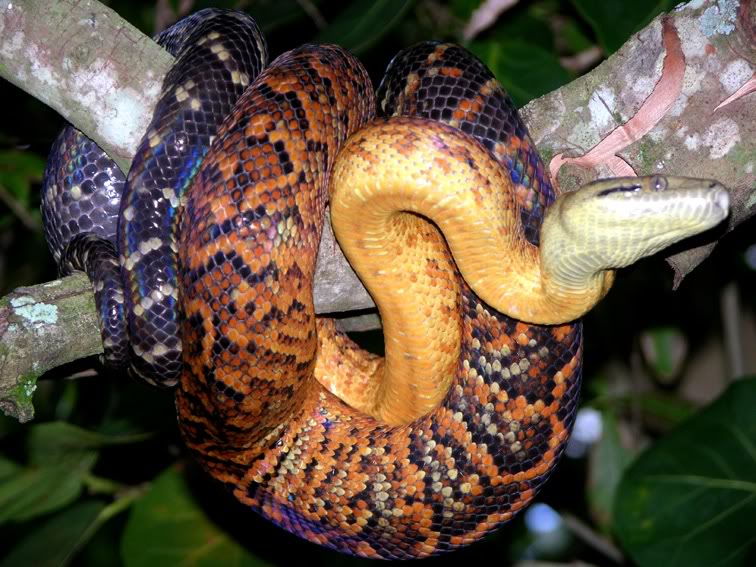
The Jamaican boa, the yellow constrictor or sometimes yellow snake, as the local people termed it, is snake specie found throughout Jamaica. Contrary to the connotation of many, it is not venomous. It can also be beneficial in a way that it lessens the number of rodents in farms by eating them, that’s why it is a friend to farmers. But unfortunately, a large number of it is killed annually due to a strong belief by locals that they are venomous.


GENERAL CHARACTERISTICS AND DESCRIPTION

This snake’s adult size can reach to about 6 feet. It is generally golden yellow or orange in color, with bands of black in its back. Olive green is the color of the top of its head lined with black stripes. In Jamaica, male boas are larger than the females unlike in South American species. This specie is arboreal and feeds on birds, rats but it can also hunt for food on the ground like frogs. It kills the prey by squeezing it around its large body and then, swallows it whole.

HABITAT

The Jamaican boa is not imported species; it is indigenous to Jamaica, though some species that can only be found in South America are transferred to the Caribbean to permanently dwell there. The boa prefers sugarcane fields or limestone forest as its habitat. They can also live on trees and caves.

LIFE CYCLE

Jamaican boas breed in late winter. And it is interesting to know that unlike other snakes, Jamaican boas give birth not with eggs but to a live young in early winter. When the young snake develops, it undergoes ecdysis, or the shedding of skin as a whole in snakes. It only feeds on small amphibians like lizards. When it became an adult, it can reach up to 6 feet as mentioned earlier. It now has the ability to use its size and strength to constrict preys.

LIFE SPAN

A Jamaican boa can live utmost 35 years. These species of reptile are now facing extinction due to introduction of non-native animals on Jamaica which feeds on them. In addition to this, habitat destruction is also one of the major forces that led these animals to enormous decline in number.